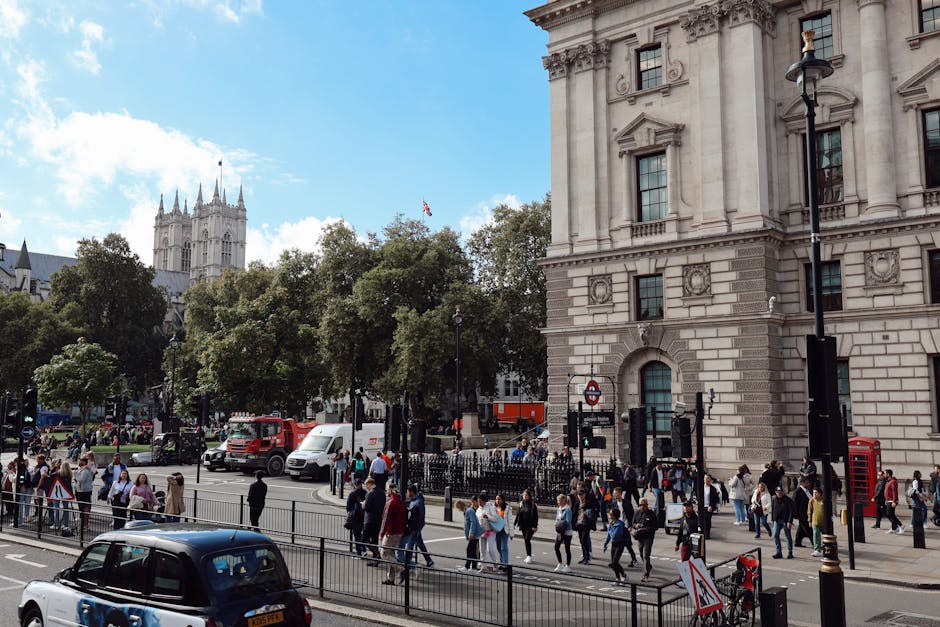
ULEZ, congestion and Aldwych moves: fees explained
Planning a move around Aldwych can feel straightforward right up until the driving fees start showing up. ULEZ, congestion charging, parking restrictions and council permissions can all change the true cost of moving day - sometimes by a little, sometimes by enough to upset the budget. If you are comparing quotes or trying to work out why one removal job costs more than another, this guide to ULEZ, congestion and Aldwych moves: fees explained will help you see the whole picture in plain English.
We will break down what the charges are, when they tend to apply, how removal journeys around Aldwych are usually planned, and where the easy-to-miss costs sit. You will also get practical steps, a comparison table, a checklist, and a few real-world examples from the kind of streets and access issues that matter in central London. No fluff. Just the bits that save money and stress.
Why ULEZ, congestion and Aldwych moves: fees explained matters
Aldwych sits right in the sort of London environment where moving vans can pick up extra charges without much warning. The roads are busy, stopping is limited, and the journey often runs close to chargeable zones. If your mover or van is not prepared, the fee can quietly become part of the moving bill. That is why this topic matters before you book, not after the van has already pulled away.
For households, students, and offices alike, the main issue is simple: moving costs are not just labour and vehicle hire. They may also include road-user charges, waiting time caused by traffic, loading delays, and even parking-related penalties if the job is poorly timed. To be fair, it is the sort of thing many people only think about after they have heard the total. Nobody likes that moment.
Aldwych and the surrounding central London streets also reward good planning. A move that starts early, uses the right vehicle, and avoids needless waiting can feel calm and controlled. A move that ignores access, charging zones, or permit needs can feel like a slow, expensive shuffle with a kettle still unpacked and someone asking where the sofa went. Not ideal.
If you are already researching the moving process in central London, it can help to read a few related guides too, especially our posts on moving in and around the Strand and the best times for moving on Kingsway. They add useful local context for timing and access.
Expert summary: the cheapest move is not always the lowest headline quote. In central London, the real cost often depends on zone charges, access, timing, vehicle choice and how efficiently the crew can load and unload. That is where planning pays off.
How ULEZ, congestion and Aldwych moves: fees explained works
There are three separate things people often lump together: ULEZ, congestion charge and local moving access costs. They are related, but not the same. Understanding the difference matters because each one can affect a removals job in its own way.
ULEZ in plain English
ULEZ is a clean-air charge that applies to certain vehicles that do not meet the required emissions standard for the zone. It is not a moving fee as such; it is a vehicle charge. If a removal van does not meet the standard and enters the zone, the operator may need to pay the charge. That cost is often factored into the quote.
For a mover, the key question is not only "Can the van get there?" but "Can it get there without adding avoidable charges?" A cleaner, compliant vehicle can keep the job more predictable. If a company uses a mixed fleet, the right van for the route can make a noticeable difference. Sometimes people assume all vans are treated equally. They are not, and that catches people out.
Congestion charge and why timing matters
The congestion charge is different again. It generally relates to driving in certain central London areas during chargeable hours. For an Aldwych move, that means the time of day can matter just as much as the distance travelled. A job that lands in the wrong window may become more expensive than one done earlier or later.
This is where removal planning becomes more than logistics. A good mover will think about route, arrival slot, loading time and departure time together. If the crew arrives at the wrong moment, you can get trapped behind traffic, pay more in vehicle charges, and lose precious time on loading. The van is there, the boxes are ready, and then... it just sits. Annoying, really.
Local access, parking and waiting time
Aldwych is not a place where a vehicle can always pull up anywhere and stay there. Access restrictions, limited parking, loading bays and one-way flow can all shape the cost. Even when there is no official charge, the time spent hunting for a safe stopping point can add labour hours. That is an indirect fee, but it is still a fee.
When moving from a flat or office near the Strand, the crew may also need to deal with narrow entrances, stairs, lifts, or shared access routes. If you want a deeper look at those challenges, our article on staircase, narrow mews and lift access problems is worth a read.
What usually goes into the price
- Vehicle charges: ULEZ or congestion-related costs where relevant.
- Labour time: loading, unloading, carrying and waiting.
- Parking or access delays: time lost finding a legal stopping point.
- Vehicle suitability: the right van size and emissions standard.
- Complexity of the property: stairs, lifts, distance from kerb to door.
- Special handling: items that need extra care or equipment.
A practical way to think about it is this: if the route and access are simple, your bill is easier to predict. If the route is central, timed badly, or tied to a restricted street, the fees may rise even if the job itself is not huge.
Key benefits and practical advantages
Understanding the fees is not just about avoiding surprises. It helps you make better choices. Once you know what can affect the total, you can book smarter, compare quotes properly and reduce the chance of day-of-move drama.
Better quote comparisons
Two quotes might look similar at first glance, but one may include transport charges while another leaves them as extras. Knowing the language helps you compare like with like. That is especially useful when you are checking a man and van quote against a full removals service.
Lower risk of hidden costs
Hidden costs often come from assumptions. People assume the van can park outside. They assume the journey will miss chargeable hours. They assume the driver already knows every loading restriction. Sometimes those assumptions work out. Often they do not.
Less moving-day stress
Once the financial side is clear, the whole move tends to feel calmer. You can focus on boxes, fragile items and keys rather than worrying whether a charge will appear later. That peace of mind is worth something, even if it does not show up as a line item on the invoice.
If you want to reduce overall stress, our guide on secrets to a calm and stress-free house move covers the wider planning side, while packing like a pro helps you avoid last-minute chaos.
More efficient vehicle choice
Sometimes the right answer is not the biggest van. It is the best-suited van. A vehicle that can access the street, fit the load, and avoid unnecessary charge categories often gives the best overall value. Bigger is not always better. Bit of a myth, that one.
Who this is for and when it makes sense
This guidance is useful for almost anyone moving in or around Aldwych, but it is especially relevant if your move involves central London driving or time-sensitive access.
- Home movers: especially if you are moving between flats, townhouses or managed buildings.
- Students: where the move may be smaller but timing and parking are still tricky.
- Office relocations: where downtime matters and delivery windows are tight.
- Furniture-only moves: such as sofas, beds, wardrobes or appliances.
- Last-minute moves: when planning time is short and fee surprises are more likely.
It also makes sense if you are trying to decide between a budget van hire and a professional service. A DIY booking can look cheaper until you add congestion, fuel, time, parking and the cost of your own stress. That is not always a bad choice, but it should be a fully informed one.
For people moving unusual items, the fee story becomes only one part of the picture. Heavy and fragile belongings often need specialist handling, and that can affect the vehicle chosen. If you have a piano, for example, piano removals in Aldwych are worth considering rather than trying to improvise with a standard approach.
Step-by-step guidance
Here is the simplest way to approach the moving fees before your Aldwych move. It is not complicated, but it does need a little discipline.
- Check your route early. Look at how the van will enter and leave Aldwych, not just where the property is located.
- Confirm whether the vehicle may incur charges. The van's emissions status and the timing of the journey both matter.
- Ask what the quote includes. Make sure vehicle-related fees, labour time and waiting time are clearly explained.
- Review loading and parking access. If the street is tight or heavily restricted, factor in extra time.
- Choose the right move window. Where possible, avoid the busiest chargeable periods and peak traffic.
- Prepare the property properly. Clear hallways, label boxes, and keep essentials separate so the crew can move quickly.
- Use the correct support for heavy items. The fewer delays on site, the lower the chance of avoidable hourly costs.
In our experience, this part makes the biggest difference: the fastest move is usually the best-planned one. It sounds obvious, but you would be surprised how often people leave packing, parking and paperwork until the last minute.
If your move includes awkward items or furniture that needs dismantling, the practical advice in our furniture removals Aldwych page and the article on moving your bed and mattress efficiently can help you save time on the day.
Expert tips for better results
A few small choices can protect your budget more than people expect. None of these are dramatic. That is the point.
Book a realistic start time
Trying to start in the middle of the busiest traffic window is rarely worth it. If the vehicle sits in traffic for half an hour, the labour clock is still running. Early starts are often calmer, cleaner and less stressful. You can hear the street waking up instead of fighting it.
Use one clear point of contact
Moves go better when someone at the property can answer access questions quickly. A driver circling while someone looks for keys or lifts is how costs creep up. One contact, one plan, no confusion. Simple, but effective.
Label by room and priority
Clear labels help the crew unload faster. If the first things off the van are the essentials, you can settle in sooner and avoid unnecessary back-and-forth. It is a tiny detail, yet it often saves the most time.
Separate fragile and awkward items
When boxes are mixed randomly with heavier items, the loading process slows down. If you have delicate items, keep them clearly marked and, ideally, packed early. For more on preparing contents properly, have a look at top strategies to tidy up before relocating.
Keep paperwork and permits ready
If your move needs a permit, access note or building manager approval, keep it close at hand. A ten-minute delay in central London can feel like forever. Truth be told, it often costs more than people expect.
Common mistakes to avoid
Most fee problems come from a handful of predictable mistakes. Once you know them, they are easier to avoid.
- Assuming every van is exempt: not all vehicles have the same charge profile.
- Ignoring the time of day: congestion-related costs can depend on timing as much as location.
- Underestimating loading time: stairs, lifts and long walks from the kerb all add up.
- Not checking parking access: a legal parking plan beats a hopeful guess every time.
- Forgetting building restrictions: some properties need booking slots or access permission.
- Mixing moving fees with service fees: always ask what is included, and what is extra.
One of the biggest mistakes is trying to save a small amount by choosing a badly timed slot. That can backfire fast. If the van is delayed, the labour overruns, the route costs more, and suddenly the "cheap" option is not so cheap after all. Happens all the time.
If you are coordinating a more complex move, our last-minute Aldwych moves guide and the article on avoiding Westminster council fines and moving permits can help you stay on the right side of both timing and access.
Tools, resources and recommendations
You do not need a dozen apps or spreadsheets to organise a move, but a few simple tools make a real difference.
- A route check: use a map in advance to see the likely arrival and exit roads.
- A moving checklist: keeps packing, access notes and keys in one place.
- Property measurements: doorways, stairwells and lift sizes matter more than people think.
- Labelled box system: room name, priority level and fragile marking.
- Quote comparison notes: write down what each mover says about vehicle fees and waiting time.
For service planning, the pages on services overview, man with a van Aldwych, man and van Aldwych and house removals Aldwych are useful starting points when you are comparing moving options.
If you are weighing safety, insurance, or payment clarity alongside fees, it is also sensible to review insurance and safety and payment and security before booking. A good quote should feel clear, not mysterious.
Law, compliance, standards, or best practice
Because this topic touches transport charges and central London access, it is sensible to approach it carefully. The exact fees and operating rules can change over time, and different vehicles may be treated differently depending on emissions standards, route, and timing. So the safest approach is to treat any moving quote as a live estimate, not a fixed certainty until the details are confirmed.
In practical terms, best practice usually means:
- checking the vehicle's suitability for the route before moving day;
- being clear about whether fees are included or passed through separately;
- respecting local parking and loading restrictions;
- allowing enough time for access issues common in central London;
- keeping communication clear with the mover or driver.
That might sound a bit formal, but it saves hassle. Central London does not reward guesswork. It rewards preparation.
For people who want a cleaner or more responsible move, our recycling and sustainability page explains how disposal and reuse can be handled with less waste, which is especially handy if you are clearing items before a relocation.
Options, methods, or comparison table
Here is a simple comparison to help you see how fee exposure can change depending on the moving method. It is not a price list, just a practical way to think about risk and planning.
| Moving approach | Typical fee exposure | Best for | Main watch-out |
|---|---|---|---|
| DIY van hire | Higher if the van is not compliant or the route is poorly timed | Small loads with flexible timing | Parking, charges and self-loading delays |
| Man and van | Moderate, depending on vehicle and timing | Flat moves, student moves, partial loads | Clarify what transport fees are included |
| Full removals team | Often more predictable if priced properly | Whole-house or office moves | Check whether vehicle charges are bundled in |
| Same-day service | Can be higher because speed and availability matter | Urgent or last-minute moves | Less room for route optimisation |
The important thing here is not to chase the lowest number blindly. The best option is the one that fits your access, timing and load size without surprise add-ons. That is where value lives.
If your job is a lighter one, a focused service such as student removals Aldwych may be enough. If you need speed, the page on same-day removals Aldwych can be useful. If you need something more specialised, explore removal services Aldwych or removal companies Aldwych to compare approaches.
Case study or real-world example
Let's say a small flat move starts near Aldwych on a weekday morning. The customer has a bed, a sofa, a few dozen boxes and some kitchen items. Nothing extreme. At first glance, it looks like a quick two-hour job. But the building has a narrow entrance, the lift is shared, and the van cannot sit outside for long without careful planning.
If the driver arrives in a chargeable window, spends extra time looking for loading space, and has to wait while access is arranged, the total grows. Not because the items are difficult, but because the movement around them is difficult. That is the part people forget.
Now compare that with a better-planned version. The customer clears the hallway in advance, confirms the lift booking, labels everything, and agrees an arrival time that avoids the busiest traffic period. The same load, same distance, but fewer delays. The bill is usually cleaner too. Simple. Nothing magical.
We have seen that kind of difference repeatedly in central London moves, especially where building access is tight. A little planning changes the whole feel of the day. One version is a scramble. The other feels like a controlled handover.
For especially awkward furniture or storage needs, guides like sofa storage advice, freezer storage guidance and storage in Aldwych can help you decide whether to move everything in one go or split the job.
Practical checklist
Use this checklist before moving day. It is the kind of thing that saves you from the little mistakes that become expensive later.
- Confirm whether the van may face ULEZ or congestion-related charges.
- Ask if those charges are included in the quote or billed separately.
- Check the exact moving date and time against likely traffic conditions.
- Review parking and loading access outside the property.
- Make sure building rules, lift bookings or access permissions are in place.
- Measure any awkward items that need extra handling.
- Label boxes by room and priority.
- Keep valuables and essentials separate.
- Tell the mover about stairs, narrow doors or long carries.
- Have a backup plan if the van cannot stop directly outside.
- Review payment terms before the job starts.
- Keep a copy of your booking details and arrival window.
If you want to get properly prepared, it can also help to brush up on pre-move cleaning steps and bed and mattress moving strategies, especially if you are moving into a flat where space is tight from day one.
Conclusion
ULEZ, congestion and Aldwych moving fees are not just background details. They shape the actual cost of getting from one place to another, and they can change how stressful the day feels. The good news is that most of the surprises are avoidable with a bit of planning, the right vehicle, and a clear quote.
When you understand what is being charged, why it is being charged, and how access in Aldwych affects the schedule, you can make much better decisions. That means fewer shocks, better timing, and a move that feels more like a plan than a scramble. And honestly, that is what most people want most of all.
Get a free quote today and see how much you can save.
If you are still refining the move itself, reading a few more practical guides on packing, access and timing can make the day easier than you expect. One small bit of planning now can spare you a lot of faff later, which is probably the most London thing ever.
Frequently Asked Questions
What does ULEZ mean for an Aldwych move?
ULEZ can add a vehicle charge if the removals van does not meet the required emissions standard for the zone. For an Aldwych move, that means the type of van used matters, not just the route.
Is congestion charge the same as ULEZ?
No. They are separate charges. ULEZ is based on vehicle emissions, while congestion charge relates more to driving in certain central London areas during chargeable times. A move can be affected by one, the other, or both.
Do removal companies normally include these fees in the quote?
Some do and some do not. Always ask directly. A clear quote should say whether transport-related charges are included, estimated, or passed through as extras.
Why do moving costs in Aldwych seem higher than elsewhere?
Central London access is the big reason. Traffic, parking limits, loading restrictions, and route charges can all add to the total. The move itself may be simple, but the location can make it more expensive.
Can I reduce fees by choosing a different moving time?
Often, yes. Avoiding the busiest traffic and chargeable periods can reduce delays and lower the chance of extra costs. That said, exact savings depend on the vehicle, route and access conditions.
What should I ask before booking a man and van service?
Ask about vehicle charges, waiting time, parking arrangements, access constraints and whether any fees are included in the quote. It is a bit dull, but these questions save money later.
Do flats and offices in Aldwych create different fee risks?
Yes. Flats often involve stairs, lifts or long carries. Offices may have time windows, security checks or loading restrictions. Both can add time and therefore affect the final cost.
What if the van cannot park right outside my property?
Then the crew may need to carry items further, which can increase labour time. In central London, this is common enough that it should be planned for in advance rather than treated as a surprise.
Are same-day removals more likely to cost extra?
They can be. Urgent bookings leave less room to optimise route, timing and vehicle choice. That does not always mean they are poor value, but the margin for error is smaller.
How can I compare quotes properly?
Look beyond the headline price. Compare what is included, whether vehicle-related charges are listed, how waiting time is handled, and whether the quote reflects the actual access conditions at the property.
Should I worry about furniture size as well as fees?
Absolutely. Bigger or awkward items can change the van size, loading time and manpower needed. If you have bulky furniture, it is worth reviewing specialist options like flat removals Aldwych or the more general removals Aldwych service to match the job properly.
What is the smartest first step if I am moving in Aldwych?
Start by checking access, route and timing before you confirm the booking. Once those are clear, it becomes much easier to estimate the real cost and avoid awkward add-ons.